- cwf.forum@gmail.com
- Tahachal, Ward no: 13, Kathmandu Metropolitan City, Bagmati Province, Nepal.
- 977-1-5372506
Events / Activities Details
25
Aug
16 sessions of Innovative Organic Farming Training
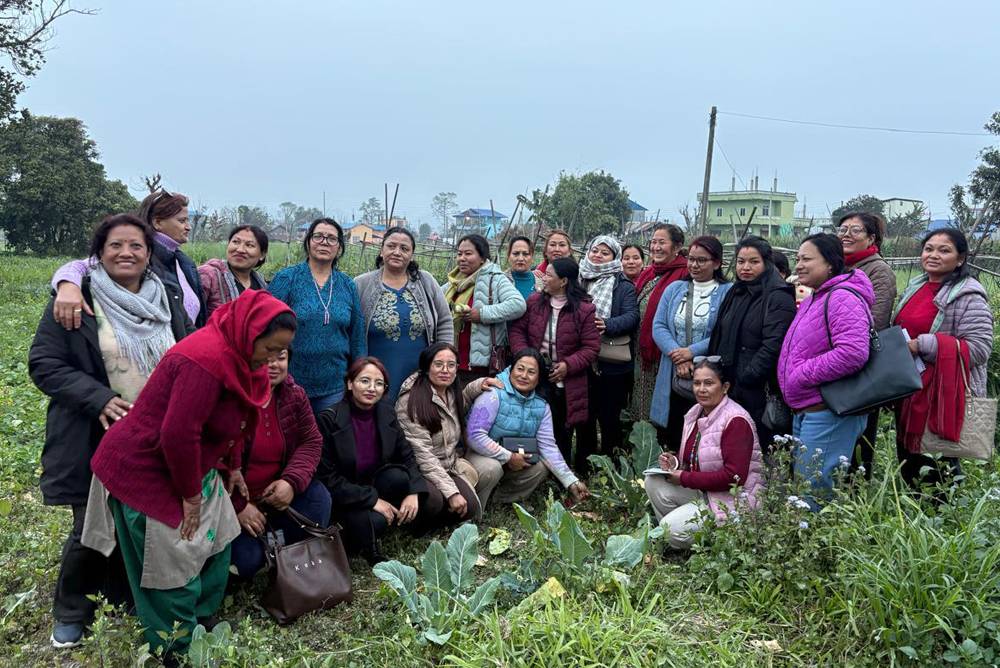
CWF organized 16 sessions of Innovative Organic Farming Training targeting grassroot women from Khokana and Thankot who are actively involved in agriculture. The sessions were conducted in Chandragiri Municipality (Wards 3 and 4, Thankot) from June 11 to November 3, 2025, and in Lalitpur Metropolitan City (Ward 21, Khokana) from June 7 to October 31, 2025. A total of 62 grassroot women involved in agriculture were engaged in the training session. The training was facilitated by Pushpa Mishra as the Lead and Vidya Laxmi Manandhar as the Co-facilitator, in collaboration with local partners, including the Thankot Mahila Jagaran Saving and Credit Cooperative and the Khokana Mahila Saving and Credit Cooperative. The training program focused on sustainable kitchen and terrace gardening, gender justice in food systems, climate-resilient and sustainable agriculture. The primary goal was to increase food security and reduce dependence on chemical fertilizers and pesticides.
The primary goals include enhancing skills and knowledge in organic farming practices, particularly through the implementation of Integrated Pest Management (IPM). Additionally, there is a focus on minimizing the reliance on chemical fertilizers and pesticides. Furthermore, efforts will be made to promote awareness regarding nutrition, sustainable agricultural practices, and the importance of food security.
The training process commenced with thorough planning and coordination, which involved organizing meetings with local cooperatives to identify potential participants. A comprehensive training schedule was crafted, including a total of 16 sessions designed to cover various aspects of agricultural practices. To facilitate effective learning, training materials such as seeds, tools, grow bags, and compost drums were prepared and distributed to participants. Additionally, a plastic tunnel house was constructed to serve as a venue for practical demonstrations, allowing participants to engage directly with the materials and techniques being taught.
The training methodology was structured to maximize both theoretical knowledge and practical application, with each session comprising two hours of theoretical instruction followed by two to three hours of hands-on fieldwork. Participants were organized into five groups, fostering an environment of teamwork and peer learning. The sessions incorporated participatory discussions, group activities, games, and field demonstrations to enhance engagement. To provide a tangible learning experience, Integrated Pest Management (IPM) plots and traditional farming plots were established for direct comparison. To assess the effectiveness of the training, pre- and post-tests were administered to evaluate knowledge retention, while home visits were conducted to ensure individual follow-up and mentoring. The program concluded with a closing session that involved local leaders, during which participants were awarded certificates recognizing their achievements.